Insight into the History of Wet Wipes Lid Labeling Process: Classifications, Development Trends
A wet wipes with lid can better enhance customers' usage experience. The wet wipes lid effectively seals the wet wipes, maintaining their moisture and hygiene. Moreover, the label on the wet wipes lid serves as a showcase for the brand. A wet wipes manufacturer can convey rich information, such as the brand, to users by designing labels in different colors and patterns. The labeling process of wet wipes lids is of great significance. Now, let's explore the specific methods.
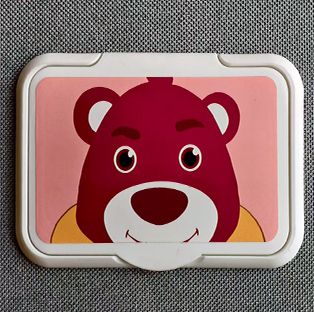
1. Common(standard) Labeling Process
Currently, most wet wipe lids adopt this process, which is accomplished by a labeling machine on a wet wipes lid applicator machine. First, various patterns are printed on sticky labels, and then the labeling machine adheres the labels to the lids.
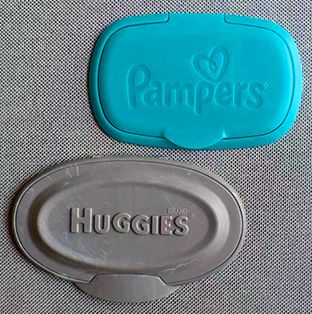
2. Mold-Engraved Pattern Process
The pattern is designed on the wet wipes lid mold in advance and presented through the concave-convex design of the mold. Its advantage is that it eliminates the need for additional labels, thereby reducing costs. However, the drawback is that it can only produce simple patterns in a single color, presented through the use of concavity and convexity.
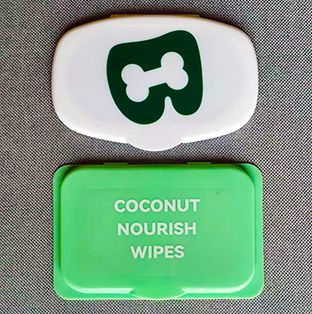
3. Direct Printing Process
Standard methods include screen printing, etc., as well as the latest digital printing process. This process is generally suitable for products with high-quality requirements, such as wet wipes with plastic lids, which are relatively unique and high-end.
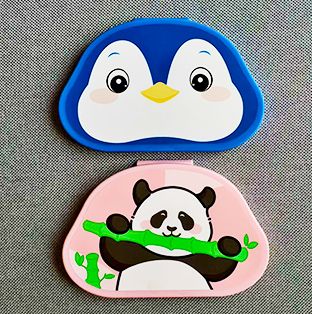
4. In-Mold Labeling Process
The pattern is printed on a label that does not require adhesiveness. During the injection-molding process of the lid, the label is embedded into the wet wipes lid by a robotic arm, integrating the label and the lid into one piece through a one-step forming process. This process can reduce the cost of the lid because the label does not need adhesive materials. It features accurate positioning, differing from traditional labeling and positioning processes, and its production effect can be comparable to printing. Nowadays, some high-end Chinese brands and European enterprises have gradually begun to adopt this process.
5. Summary
Each of the labeling production processes for wet wipe lids has its characteristics, advantages, and disadvantages. The standard labeling process is widely used and can achieve diverse patterns. The mold-engraved pattern process offers cost-saving advantages but is limited in terms of pattern expression. The direct printing process is suitable for products with high-quality requirements. The in-mold labeling process, with its cost reduction, accurate positioning, and excellent effect, is gaining popularity among high-end brands. Enterprises can select the most suitable process based on their product positioning, cost considerations, and market demands to create unique and high-quality packaging for wet wipe products.