Non Woven Fabric for Wet Wipes: Complete Production Process Guide from Raw Material to Final Product
How Are Non Woven Fabric for Wet Wipes Produced?
Non woven fabric for wet wipes are the backbone of wipes nonwoven products, providing the strength, softness, and absorbency that make wipes effective. In this article, we will take a closer look at the complete production process of non woven fabric for wet wipes, from raw materials to the final product, and offer you a virtual tour of the factory to see how it all comes together.
Step 1: Sourcing and Preparing Raw Materials
The production of non woven fabric for wet wipes begins with selecting the right raw materials. Currently, the most commonly used materials for wipes nonwoven are:
Viscose/Rayon: Known for its excellent softness and absorbency, making it ideal for skin contact.
Polyester (PET): Adds strength and flexibility to the fabric, ensuring durability and resistance to tearing.
In the Chinese market, the typical fiber specifications are:
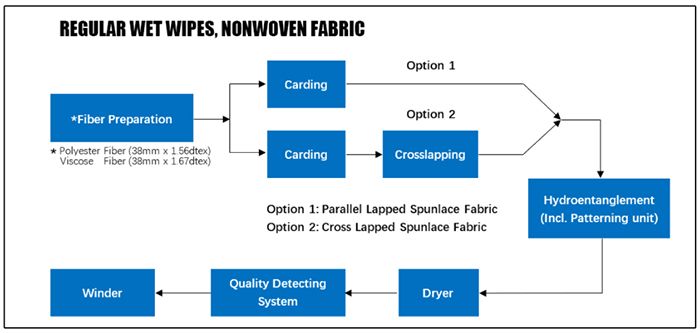
Polyester Fiber (38mm x 1.56dtex)
Viscose Fiber (38mm x 1.67dtex)
These fibers are carefully chosen to balance softness, absorbency, and strength, which are critical properties for high-quality wipes nonwoven. The raw fibers are delivered to the factory and prepared for blending and processing.
Step 2: Fiber Blending and Carding
Once the raw materials are ready, they undergo a process known as fiber blending, where different types of fibers are mixed together to achieve the desired properties. This is a critical step as it determines the balance of softness, strength, and absorbency.
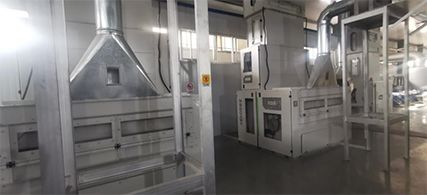
The blended fibers are then fed into a carding machine, which aligns them in a uniform direction. Carding is essential for creating a smooth and consistent fabric surface, ensuring even distribution of fibers. There are two common types of carding techniques used in the production of spunlace fabrics:
Option 1: Parallel Lapped Spunlace Fabric
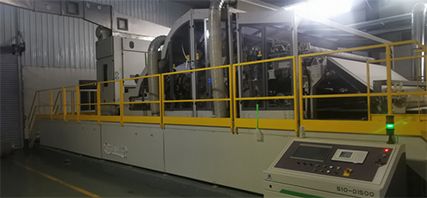
In this method, the fibers are carded and laid out in a parallel direction. This produces a fabric with good softness and smoothness, making it ideal for applications where comfort and gentle touch are prioritized, such as facial wipes or baby wipes. However, compared to cross-lapped fabrics, it may not be as strong, especially under tension. It is a simpler and more cost-effective method, which makes it the most commonly used type of non woven fabric for wet wipes.
Option 2: Cross Lapped Spunlace Fabric
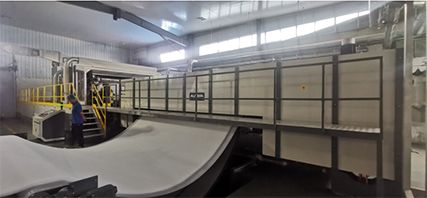
Unlike the parallel lapping method, cross lapping involves layering the fibers in multiple directions, creating a criss-cross pattern. This process results in a stronger and more durable fabric that can withstand higher levels of stress and strain. The cross-lapping technique is more complex and requires additional processing steps, but it produces a non woven fabric for wet wipes with enhanced strength and stability. This makes it suitable for heavy-duty wipes or industrial cleaning applications, where durability is key. It also has a niche market in high-end household wet wipes, although its higher cost limits its use in that segment.
Step 3: Web Formation – Spunlace Technique
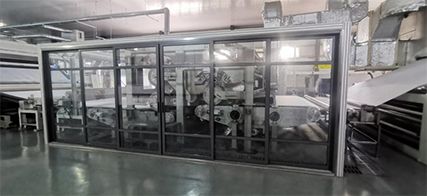
In China, the production of wipes nonwoven fabrics for wet wipes primarily uses the spunlace (hydroentangling) technique. This method involves laying out the aligned fibers to form a web, which is then treated with high-pressure water jets. These jets entangle the fibers, creating a strong and soft non woven fabric for wet wipes without the need for any bonding agents, making the process environmentally friendly.
The spunlace technique is favored for its ability to produce wipes nonwoven fabrics that are both durable and gentle to the touch, which is ideal for wet wipes. The process also allows for flexibility in terms of fiber blends, making it easier to tailor the properties of the fabric based on specific requirements, such as softness or absorbency.
Step 4: Drying – Removing Excess Moisture
After the web is formed, the non woven fabric for wet wipes undergoes a drying process. This step is essential to remove any excess moisture retained from the hydroentangling process. The fabric passes through a series of heated drying units that ensure it is thoroughly dried, maintaining its strength and softness. Proper drying is crucial as it prevents issues like mold growth and ensures the fabric’s quality and durability.
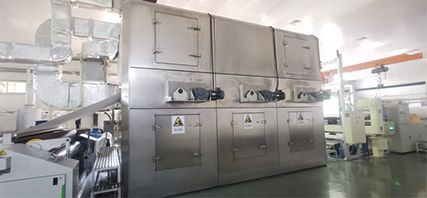
The moisture content directly affects the performance and cost of the non woven fabric for wet wipes. A carefully controlled drying process ensures that the wipes nonwoven fabric has the right balance of flexibility and strength, optimizing its use in wet wipes production and keeping costs manageable.
Step 5: Quality Control – Ensuring Perfection
Quality control is a critical part of the production process. Each batch of non woven fabric for wet wipes is tested to ensure it meets specific standards of strength, softness, absorbency, and durability. This ensures that the end product is reliable and effective for consumers.
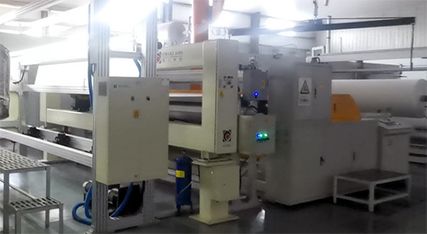
Online Inspection: Modern production lines for wipes nonwoven are equipped with real-time online inspection systems. These systems continuously monitor the non woven fabric for any defects, such as uneven density, inconsistent thickness, or foreign particles. Advanced sensors and imaging technology detect issues during the production process, allowing for immediate adjustments and reducing the likelihood of defects. Online inspection enhances production efficiency, minimizes waste, and ensures that the final product consistently meets high-quality standards.
Step 6: Rewinding – Preparing for Wet Wipes Production
Once the non woven fabric for wet wipes passes all quality checks, it goes through the rewinding process, where it is rolled into large spools. Rewinding ensures that the fabric is tightly and neatly wound, preventing issues during the later stages of production. These spools are then packaged and sent to wet wipes manufacturers, where they will be cut, soaked, and packaged into the final product consumers use daily.
Virtual Tour of the Factory: Experience the Process Firsthand!
Want to see how these steps come to life? Imagine walking through the factory floor, hearing the hum of machines, and watching as fibers are transformed into soft, durable wipes nonwoven fabric right before your eyes. Each machine plays its part, from the carding machine to the final rolling station. This tour helps you understand the meticulous attention to detail that goes into producing high-quality non woven fabric for wet wipes.
Conclusion: The Essential Role of Non-Woven Fabrics in Wet Wipes Production
The production of non woven fabric for wet wipes is a complex process that combines raw material selection, advanced manufacturing techniques, and rigorous quality control. By understanding how these fabrics are made, you can appreciate the technology and craftsmanship behind every wet wipe you use. Next time you reach for a wet wipe, remember the journey it took from fibers to a finished product.