Barrier Performance of Wet Wipe Packaging Films: Key Influences of Layer Count and Material Choice
Introduction
The barrier performance of wet wipe packaging films is crucial in preserving product quality and extending shelf life, making it a top priority in packaging design. Multiple factors affect barrier effectiveness, including the number of layers, thickness, and the characteristics of the materials used. This article focuses on the impact of layer count and material selection, especially as they relate to wet wipes raw material, in optimizing the barrier properties of wet wipe packaging films.
I. Multiple Factors Influencing Barrier Performance
The barrier performance of wet wipe packaging films is not determined by a single element but by the interplay of various factors, notably the layer count, thickness, and the choice of wet wipes raw material:
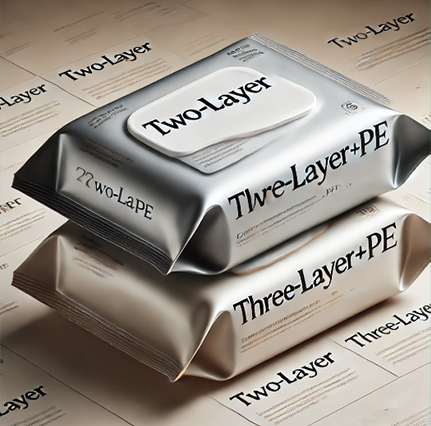
Layer Count: Each additional layer can enhance barrier effectiveness but may also increase material costs. While dual-layer structures (OPP+PE) are sufficient for most wet wipe storage needs, products requiring high barrier protection may benefit from a three-layer structure.
Thickness: Increasing layer thickness can improve barrier properties, though it may also affect the film’s softness and feel. The new dual-layer films use a thicker PE layer, a key wet wipes raw material, to achieve enhanced barrier protection while maintaining a softer texture.
Material Composition: Different types of wet wipes raw material offer distinct barrier benefits. For instance, PE layers provide effective moisture resistance, while PET layers are more suited to oxygen barrier needs. In dual-layer films, removing the PET layer achieves a soft touch and cost-effectiveness.
II. Application Scenarios for Dual and Triple-Layer Structures
Through careful selection of layer count and wet wipes raw material, packaging films can meet barrier needs while balancing cost and feel:
General Wet Wipe Products: Dual-layer OPP+PE structures sufficiently meet everyday storage needs, offering a softer texture and cost advantages. This structure combines optimal barrier properties with minimal use of wet wipes raw material.
High Barrier Requirement Products: The three-layer OPP+PET+PE structure provides an added layer of protection, ideal for wet wipes that require extended storage times and extra protection against oxygen and moisture. Here, using a three-layer structure with specific wet wipes raw material choices can achieve superior performance.
Conclusion
The barrier performance of wet wipe packaging films is influenced by various factors, primarily layer count, thickness, and the selection of wet wipes raw material. In packaging design, selecting the right combination of layers and materials is essential to achieving optimal barrier protection, while also balancing cost and user experience.